Romania Scrambles F-16s After Drone Alert Near Moldova Border
Romania scrambled F-16 fighters and an IAR-330 SOCAT after radar detected possible drone activity near the Moldova border on August 24.

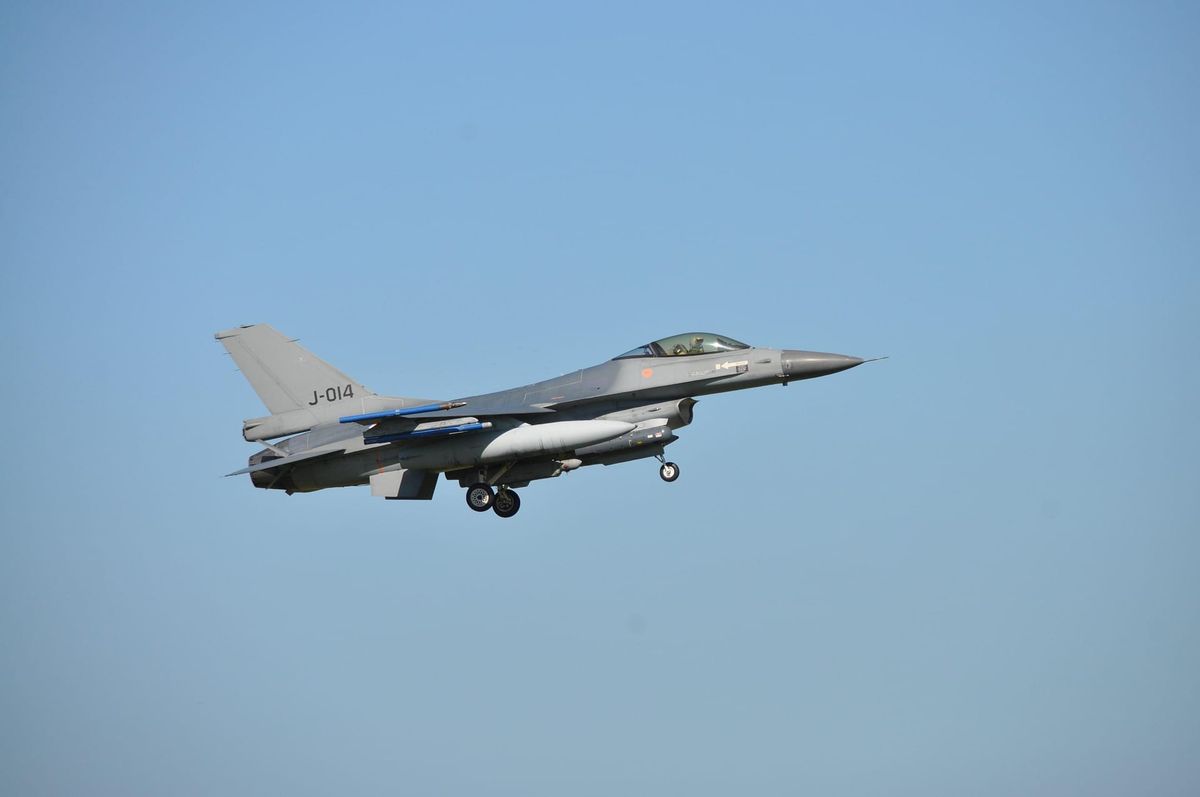
Romania scrambled two F-16 fighters and deployed an IAR-330 SOCAT helicopter on August 24 after military radars detected intermittent aerial signals near Moldova and subsequently close to Romania's Galați County. Romanian authorities issued a public warning but later reported finding no impact site or drone debris on Romanian territory.
The incident adds to growing pressure on air-defense forces along NATO's southeastern flank, where Romania and neighboring Bulgaria have faced repeated drone-related alerts and incursions linked to the wider security environment around Ukraine and the Black Sea.
Romanian F-16s launched from Borcea after radar detection
Romania's Ministry of National Defense said radar systems began detecting intermittent aerial signals at approximately 06:00 local time in Moldovan airspace near Cahul.
A signal was subsequently detected in the vicinity of Târgu Bujor in Galați County, prompting Romanian authorities to activate air-defense procedures.
Two Romanian Air Force F-16 Fighting Falcon fighters took off from the 86th Air Base at Borcea to monitor the situation.
An IAR-330 SOCAT helicopter from the 57th Air Base Mihail Kogălniceanu also deployed to search the area where the object was suspected to have approached or potentially fallen.
Romanian authorities issued a RO-Alert warning at 06:12 for the potentially affected area.
The helicopter crew found no impact point, drone fragments or other evidence indicating that an unmanned aircraft had crashed on Romanian territory. The alert ended at 08:52, and the F-16s subsequently returned to Borcea.
The available evidence therefore does not establish that a drone entered or crashed inside Romania on August 24.
Romania faces repeated drone alerts along NATO's eastern border
The response comes only days after a more serious aerial incident over Romania.
On August 16, a Spanish Air and Space Force EF-18M Hornet deployed to Romania under NATO's enhanced Air Policing mission intercepted and shot down an attack drone that had entered Romanian airspace. Janes reported that the engagement represented the first confirmed drone shootdown by a NATO fighter over Romania.
The Spanish fighters form part of NATO's strengthened air-defense presence in Romania, supplementing Romanian aircraft and ground-based systems positioned along the alliance's eastern flank.
The August 24 response demonstrates how quickly Romania now reacts to ambiguous radar tracks near its eastern frontier.
Romania shares a long border with Ukraine and Moldova, while its southeastern territory sits close to Ukrainian ports and infrastructure along the Danube. Russian attacks against targets in southern Ukraine have repeatedly brought drones and missile activity close to NATO territory since 2022.
Romanian authorities have previously recovered fragments from unmanned aircraft following Russian attacks across the border.
The operational problem is particularly difficult because small drones can fly at low altitude, produce limited radar signatures and approach NATO territory while attacks are underway only a short distance away in Ukraine.
Bulgaria faces similar drone pressure farther south
The drone problem is increasingly relevant beyond Romania.
On August 8, Bulgaria reported that an unmanned aircraft entered its airspace from the direction of Romania before exploding near the village of Shtraklevo in Ruse Province. The Bulgarian government said the explosion occurred approximately one kilometer from infrastructure associated with the Trans-Balkan Gas Pipeline.
No casualties or infrastructure damage were reported.
The incident nevertheless demonstrated the potential intersection between unmanned aerial threats and critical infrastructure in southeastern Europe.
Romania and Bulgaria occupy particularly important positions on NATO's southeastern flank. Both provide access to the Black Sea region, host allied forces and military infrastructure, and sit close to airspace affected by the war in Ukraine.
Romania has also become one of NATO's principal regional aviation hubs.
The 57th Air Base at Mihail Kogălniceanu hosts allied forces and continues to undergo major expansion, while the Romanian Air Force is building its F-16 fleet as it transitions away from Soviet-designed MiG-21 fighters.
Low-cost drones create a persistent NATO air-defense problem
The latest incidents highlight a broader challenge for NATO air defense.
Traditional fighter aircraft and surface-to-air missile systems can defeat unmanned aircraft, but repeatedly using high-value interceptors against relatively inexpensive drones creates both operational and economic pressure.
European militaries are therefore developing additional counter-UAS layers that combine electronic warfare, guns, guided rockets, short-range missiles and dedicated drone interceptors.
Italy's potential acquisition of 5,031 Advanced Precision Kill Weapon System II guidance sections illustrates that shift. Rome is evaluating the guided 70 mm rocket as a lower-cost counter-drone weapon, potentially aboard Eurofighter Typhoon fighters.
That procurement would give Italy another option between aircraft guns and substantially more expensive conventional air-to-air missiles.
Romania faces the same underlying requirement from a different geographic position.
Its proximity to Ukraine means Romanian forces must maintain the ability to detect, classify and potentially engage small aerial targets with very little warning. At the same time, NATO forces must distinguish between aircraft deliberately entering allied territory, drones losing navigation, debris from engagements across the border and ambiguous radar contacts such as those reported on August 24.
That makes persistent surveillance as important as the interceptor itself.
The Romanian response involved radar detection, fighter aircraft, a helicopter search and a civilian warning system. Even without a confirmed drone recovery, the sequence demonstrates the resources required to respond to a single uncertain aerial track near NATO territory.
Black Sea air defense is becoming a persistent mission
Romania's geographic position makes the issue unlikely to disappear.
The country sits at the intersection of NATO's eastern flank, the western Black Sea and the lower Danube corridor. It also hosts Romanian and allied air-defense assets that must simultaneously monitor conventional aircraft, missiles and increasingly numerous unmanned systems.
The August 24 alert ended without evidence of an impact on Romanian territory.
Its significance lies instead in the wider pattern.
Within weeks, southeastern NATO airspace has seen an attack drone shot down over Romania, a drone explosion reported in Bulgaria and another Romanian F-16 scramble following an uncertain radar detection near Moldova.
For NATO planners, the challenge is increasingly not whether southeastern European airspace will encounter unmanned aircraft, but how quickly and economically allied forces can identify and respond to them.