Slovakia Eyes L-39 Skyfox for F-16 Training, Drone Defense
Slovakia is considering Czech L-39 Skyfox jets to replace aging trainers, support F-16 pilot training and potentially intercept slow-moving drones.

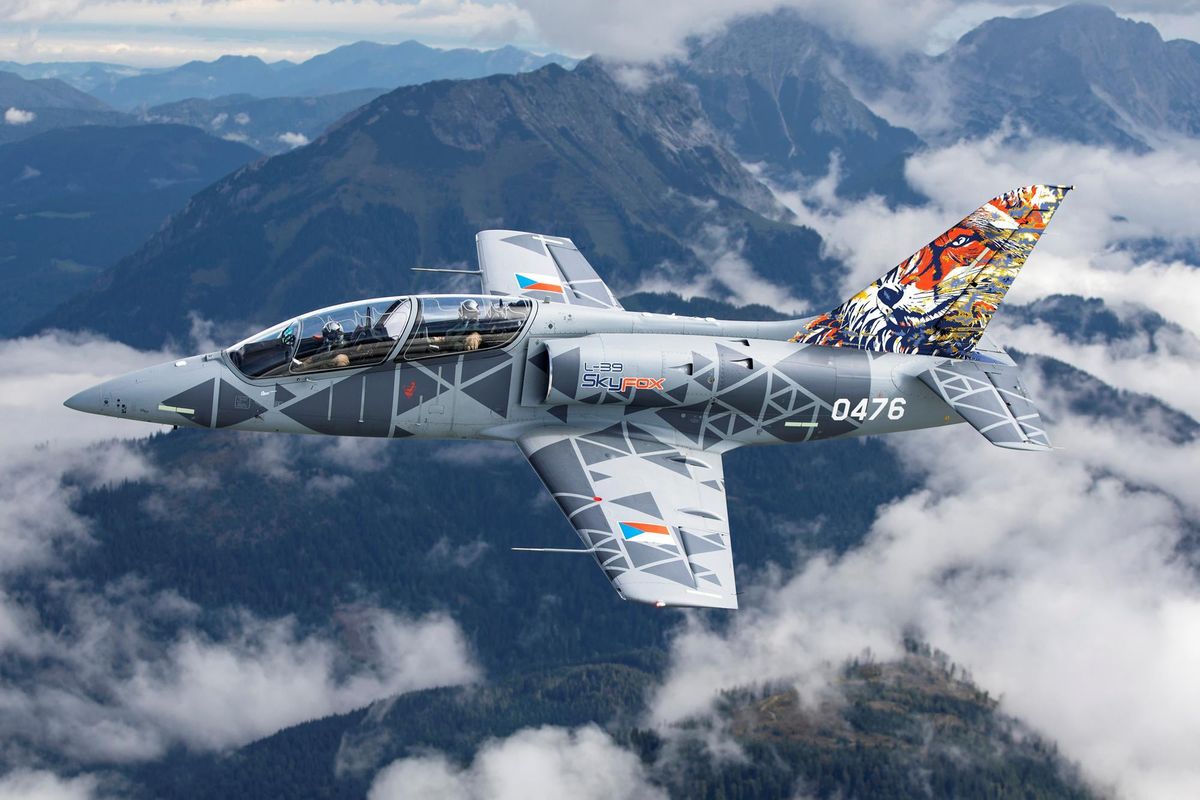
Slovakia is considering acquiring Czech-built L-39 Skyfox aircraft as it prepares to replace its aging subsonic training fleet and expand domestic training for F-16 Block 70 pilots. Defense Minister Robert Kaliňák has also identified the aircraft as a potential platform for intercepting slower long-range drones, adding an air defense role to the proposed procurement.
The discussions center on the L-39 Skyfox produced by Aero Vodochody, with Slovakia previously indicating a requirement for roughly 10 to 12 training aircraft. More recent Slovak reporting has put the potential Skyfox purchase at around 10 aircraft, although the Ministry of Defense has not announced a contract, final quantity or acquisition value.
Skyfox could bridge Slovakia's L-39 and F-16 fleets
Slovakia needs a replacement for its remaining L-39 Albatros aircraft as it simultaneously builds its new F-16 training pipeline. In April 2025, Slovak public broadcaster STVR reported that only two operational L-39 aircraft remained and that their available airframe and engine flying hours were approaching their limits.
The Slovak Air Force is introducing 14 Lockheed Martin F-16 Block 70 fighters under a program valued at $1.87 billion including aircraft, equipment and training. The first two aircraft arrived at Kuchyňa Air Base on July 22, 2024, and the fleet had increased to five aircraft by April 2, 2025.
A new advanced trainer would allow Slovakia to conduct a larger portion of pilot preparation domestically rather than using F-16 flight hours for training tasks that can be performed on a less complex aircraft. Aero describes the Skyfox training architecture as covering basic through Lead-In Fighter Training, with avionics and dual symbology intended to support pilots transitioning to Western and Eastern fighter platforms.
The Czech Republic is already introducing the same aircraft into its training system. State-owned LOM Praha received its first L-39 Skyfox in January 2026 for pilot instruction at the Pardubice Flight Training Centre, providing Slovakia with a nearby operational and training model if Bratislava proceeds with the acquisition.
Slovakia is examining Skyfox as a drone interceptor
Kaliňák has expanded the potential requirement beyond pilot training by identifying the Skyfox as an option for countering long-range drones that fly at relatively low speeds. His argument centers on matching the interceptor to the target instead of routinely assigning higher-performance fighters to threats that do not require their speed and capabilities.
Aero lists air-to-air operations against slow and low-moving targets among the Skyfox tactical configuration's roles. The aircraft can carry weapons and mission equipment across as many as five hardpoints, while the manufacturer lists a maximum payload of 1,350 kg, maximum speed of 907 km/h and endurance of 3 hours 45 minutes.
The concept reflects a broader European problem exposed by Russia's use of one-way attack drones against Ukraine. Air forces need ways to defeat comparatively inexpensive, slow aerial targets without relying exclusively on high-end fighter aircraft and their associated weapons.
For Slovakia, however, a Skyfox counter-drone role would depend on the sensors, weapons, communications architecture and rules of engagement selected for any operational configuration. Bratislava has not announced a final Slovak weapons or sensor package for the aircraft.
Czech-Slovak cooperation could extend beyond aircraft procurement
Slovakia has examined the Skyfox since at least April 2025, when Kaliňák visited Aero Vodochody and discussed a possible purchase. At the time, Slovak reporting indicated a possible requirement for approximately 10 to 12 aircraft, while the government had not specified a price or procurement schedule.
The potential acquisition would also reconnect the Slovak Air Force with an aircraft family it has operated for decades. Slovakia has maintained infrastructure, personnel experience and support arrangements around the older L-39, including contracts for maintenance support and pilot equipment.
Aero has meanwhile expanded the Skyfox customer base. The company secured additional orders in Africa and North America in 2026, while Angola selected four aircraft. Aero's production capacity was filled into the second quarter of 2027 following those contracts, according to information reported by Janes in June.
That production position could become relevant to Slovakia if Bratislava moves from discussions to a firm order. The government has yet to announce a final procurement decision, making aircraft quantity, configuration, delivery schedule and price the main issues to watch.
Slovakia L-39 Skyfox: key questions
Why is Slovakia considering the L-39 Skyfox?
Slovakia needs to replace its aging L-39 Albatros training aircraft while establishing a sustainable training pipeline for its new F-16 Block 70 fleet. The Skyfox could cover advanced and lead-in fighter training without requiring every training sortie to use an F-16.
How many L-39 Skyfox aircraft could Slovakia buy?
Slovak officials previously discussed a requirement of approximately 10 to 12 training aircraft, while reporting in July 2026 indicated negotiations around 10 aircraft. No final contract or quantity has been announced.
Could the L-39 Skyfox intercept drones?
Aero lists air-to-air operations against slow and low-moving targets among the aircraft's potential missions, and Kaliňák has specifically identified long-range drones as a possible Slovak role. The effectiveness of such a configuration would depend on the sensors, weapons and command-and-control systems Slovakia selects.
Would the Skyfox replace Slovakia's F-16s?
No. The aircraft would complement the F-16 Block 70 fleet rather than replace it. The Skyfox would primarily provide training and potentially perform selected lower-end operational missions, while the F-16 remains Slovakia's principal combat aircraft.