Turkey-Saudi-Pakistan Pact Raises NATO Article 5 Questions
Turkey, Saudi Arabia and Pakistan signed a mutual defense pact on August 7, raising new questions over NATO Article 5, Article 8 and regional deterrence.

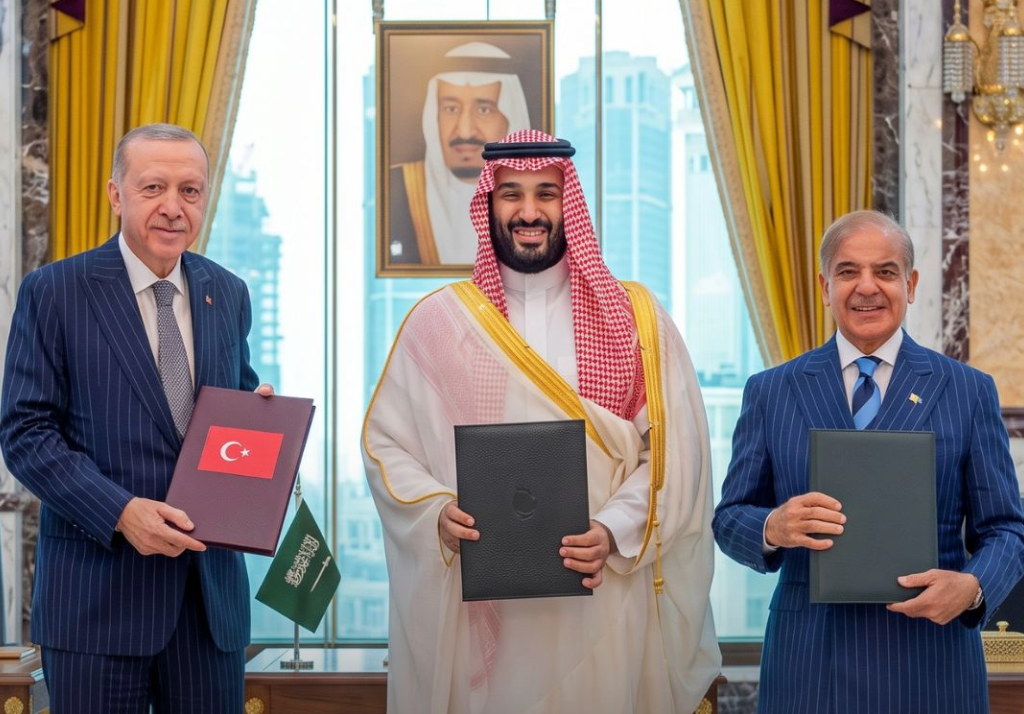
Turkey, Saudi Arabia and Pakistan signed the Mecca Joint Defense Agreement on August 7, 2026, creating a trilateral commitment under which an armed attack against one country is regarded as an attack against all three. The pact does not extend NATO protection to Saudi Arabia or Pakistan, and Turkey joining another defense arrangement does not by itself trigger or violate NATO collective defense obligations.
The more important issue for NATO is escalation management. Turkey now belongs to two security frameworks containing broadly similar political language on collective defense, but with different members, geographic scopes and military mechanisms. Until the full Mecca agreement and its implementation procedures become public, the extent of Ankara's new obligations remains uncertain.
Mecca pact creates a collective-defense pledge without specifying the response
Saudi Crown Prince Mohammed bin Salman, Turkish President Recep Tayyip Erdoğan and Pakistani Prime Minister Shehbaz Sharif signed the agreement in Mecca after negotiations that had been underway for close to a year. Pakistan's defense production minister confirmed in January 2026 that the three governments already possessed a draft of a separate trilateral agreement, distinct from the Saudi-Pakistani defense pact signed in September 2025.
The public formulation is significant. An armed attack against any of the three states is to be treated as an attack against all three, while the agreement also calls for broader defense cooperation and collective deterrence. However, neither Reuters nor the public statements released on August 7 detailed what military action each signatory must take after such an attack.
That distinction separates the political signal from the military mechanism. There is no publicly disclosed integrated command, force-generation procedure, territorial definition, consultation process or automatic military response comparable with NATO's established structures.
A Turkish official said the pact was defensive, was not directed at a specific state and did not cancel Turkey's existing agreements with other countries or organizations. That wording is particularly relevant because Turkey remains one of NATO's largest military powers and hosted the Alliance's latest summit in Ankara on July 7 and 8, only one month before signing the Mecca agreement.
NATO Article 8 is the first legal test, not Article 5
The immediate NATO question is Article 8 of the North Atlantic Treaty. It requires every Ally to avoid international commitments that conflict with the Washington Treaty.
Article 8 does not prohibit NATO members from maintaining other bilateral or regional defense relationships. The relevant test is whether those commitments conflict with obligations already accepted under the North Atlantic Treaty.
Nothing disclosed publicly about the Mecca agreement establishes such a conflict. Ankara has also explicitly presented the new pact as compatible with its existing international commitments. The full treaty text, however, would be necessary for a more definitive assessment of issues such as compulsory military intervention, command arrangements and rules governing conflicts involving another NATO member or partner.
The Mecca pact therefore does not create a straightforward choice between NATO and a second alliance. It creates an additional Turkish commitment that NATO planners may need to understand, particularly if Ankara allocates forces, air-defense assets, intelligence capabilities or logistics capacity to operations outside the Euro-Atlantic theater.
A Saudi or Pakistani attack would not automatically activate NATO
NATO Article 5 does not travel with Turkish forces wherever Ankara chooses to deploy them.
Article 5 covers an armed attack against an Ally within the framework defined by Article 6. That geographic definition includes Turkish territory and specified Allied forces, vessels and aircraft in Europe, the Mediterranean Sea and the North Atlantic area north of the Tropic of Cancer.
Saudi Arabia and Pakistan fall outside that collective-defense geography. An attack on Saudi Arabia therefore does not become an attack on NATO simply because Turkey has separately promised assistance to Riyadh.
The same principle would apply in South Asia. If Pakistan became involved in another conflict and requested assistance under the Mecca agreement, Turkish participation would remain a national Turkish commitment rather than a NATO operation. Turkish forces deployed in Pakistan or elsewhere in South Asia would not automatically receive Article 5 protection merely because Turkey is a NATO member.
The situation becomes more complicated only if escalation reaches Turkish territory or another location covered by Article 6. NATO states would then assess whether the circumstances constitute an Article 5 armed attack.
NATO also states that Article 5 requires the attacked Ally to request or consent to collective action. Each Ally then determines what assistance it considers necessary, which can include armed force but is not limited to it.
This means there is no automatic chain in which an attack on Pakistan activates Turkey, which then activates NATO. The two treaties remain legally and geographically distinct.
Article 4 may matter before Article 5 does
The North Atlantic Treaty provides a separate mechanism for situations that threaten an Ally without reaching the Article 5 threshold.
Under Article 4, Allies consult whenever a member believes its territorial integrity, political independence or security is threatened. Turkey could therefore seek NATO consultations if a conflict involving its Mecca partners created a direct security threat to Turkey, even without an armed attack on Turkish territory.
For NATO, this is probably the more realistic intersection between the two frameworks. A Middle Eastern escalation involving Saudi Arabia, Iran, Israel, the Houthis or other armed groups could generate Turkish requests for consultations, intelligence coordination, air-defense reinforcement or other defensive measures without transforming NATO into a participant in the original conflict.
That distinction will matter during any future crisis.
Saudi Arabia is adding security partners rather than replacing Washington
The Mecca agreement builds on Saudi Arabia's September 17, 2025 Strategic Mutual Defense Agreement with Pakistan. That earlier arrangement also established a collective-defense commitment between Riyadh and Islamabad.
Pakistan has since expanded its military presence in Saudi Arabia. Reuters reported on August 7 that roughly 8,000 Pakistani troops, along with fighter aircraft, drones and an air-defense system, had been deployed to the kingdom. Pakistan nevertheless did not intervene militarily against Iran when Saudi Arabia came under attack, illustrating the gap that can exist between a mutual-defense declaration and an automatic combat commitment.
Riyadh is now confronting threats from multiple directions. Iran and Iran-aligned groups have attacked Gulf states during the wider regional conflict, while Saudi officials warned on August 6 of potential attacks involving both the Houthis in Yemen and armed groups in Iraq.
The agreement therefore gives Saudi Arabia another deterrence layer without requiring it to abandon its extensive security relationship with the United States.
Pakistan has also discussed expanded defense cooperation with Kuwait, including training, procurement and possible future security support. This suggests the Saudi arrangement may form part of a wider Gulf effort to diversify defense relationships rather than replace one external security provider with another.
Turkish industry, Pakistani military capacity and Saudi capital now sit under one framework
The defense-industrial implications could eventually prove more tangible than the collective-defense clause.
Erdoğan indicated that the agreement would support joint defense-industry projects, while analysts cited by the Associated Press expect deeper cooperation in production and technology transfer rather than large permanent Turkish and Pakistani troop deployments.
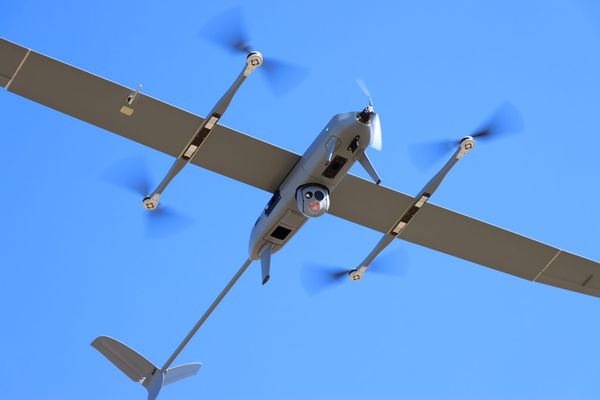
A bilateral industrial foundation already exists between Ankara and Riyadh. Saudi Arabia ordered Bayraktar Akıncı unmanned combat aerial vehicles from Turkish manufacturer Baykar in 2023 under what the company described at the time as Turkey's largest defense export contract. Saudi Arabian Military Industries and Baykar subsequently agreed to localize production in Saudi Arabia.
Turkey and Pakistan also maintain established military-industrial ties. Reuters noted cooperation involving warships and training aircraft, while both states have progressively expanded defense technology exchanges.
The emerging model is therefore complementary: Saudi Arabia can provide financing and demand, Turkey contributes an increasingly broad defense-industrial base, and Pakistan brings manpower, military experience and domestic production capacity.
No new trilateral acquisition program was announced with the August 7 agreement. The pact nevertheless provides a political framework under which joint production, technology transfer, ammunition programs, unmanned systems and air-defense cooperation could expand.
Pakistan's nuclear arsenal is not automatically part of the pact
Pakistan is the only nuclear-armed member of the new grouping, immediately raising questions about whether the Mecca agreement creates an extended Pakistani nuclear deterrent for Saudi Arabia or Turkey.
There is currently no public evidence that it does.
Saudi officials have rejected interpretations connecting the agreement with nuclear ambitions, while Pakistan had previously played down claims that its nuclear forces formed part of its bilateral Saudi defense guarantee. Reuters reported that Islamabad had said nuclear weapons were not part of its consideration of the earlier pact.
The wording on collective deterrence will inevitably sustain speculation until more details emerge. But describing Saudi Arabia or Turkey as now operating under a Pakistani nuclear umbrella goes beyond the evidence available on August 7.
The CEE and SEE concern is Turkish force availability, not NATO expansion
For Central, Eastern and South-Eastern European Allies, the immediate consequence is not that NATO's borders have informally expanded toward Saudi Arabia and Pakistan.
The more relevant issue is Turkey's ability to satisfy multiple military commitments during simultaneous crises.
Turkey remains critical to NATO's southeastern flank, the Black Sea security environment and Alliance operations around the Mediterranean. A prolonged Gulf or South Asian contingency requiring Turkish aircraft, naval forces, air defenses, intelligence assets or logistics capacity could create competing demands on capabilities that NATO also factors into regional defense planning.
There is no indication that the August 7 agreement changes Turkey's assigned NATO forces or existing Alliance commitments. In fact, the Ankara Summit a month earlier reaffirmed collective defense and NATO's 360-degree deterrence approach.
The strategic question is therefore one of prioritization rather than treaty replacement. The Mecca agreement gives Ankara another theater in which it may be asked to provide military support during a crisis.
That is why implementation will matter more than the headline clause. NATO governments will watch whether the three signatories create permanent consultation bodies, common planning structures, pre-positioned forces, integrated air and missile defense, intelligence-sharing arrangements or standing industrial programs.
Without those mechanisms, the Mecca agreement remains primarily a political deterrence commitment. With them, it could develop into a more consequential regional security architecture spanning NATO's southeastern flank, the Gulf and South Asia.
Questions about the Turkey-Saudi-Pakistan defense pact
Does Turkey's new defense pact extend NATO Article 5 to Saudi Arabia and Pakistan?
No. Saudi Arabia and Pakistan do not become NATO-protected states through their agreement with Turkey. Article 5 and Article 6 define NATO's collective-defense obligations separately, and an attack on Saudi Arabia or Pakistan does not automatically activate NATO.
Can a NATO member sign another mutual defense agreement?
Yes, provided the additional commitment does not conflict with the North Atlantic Treaty. Article 8 specifically requires Allies not to enter international engagements that conflict with their NATO obligations. Nothing disclosed publicly so far establishes that Turkey's new pact violates that requirement.
Would NATO enter an India-Pakistan war because Turkey signed the agreement?
Not automatically. Turkey could face obligations toward Pakistan under the Mecca agreement, depending on the circumstances and the pact's undisclosed provisions, but those obligations would remain separate from NATO. Turkish participation in a South Asian conflict would not itself activate Article 5 for the Alliance.
Does Pakistan now provide nuclear protection to Turkey and Saudi Arabia?
There is no confirmed evidence of an extended Pakistani nuclear guarantee under the Mecca agreement. Public statements have emphasized conventional collective deterrence and have rejected claims that the pact represents a nuclear alliance.
The agreement signed in Mecca is therefore significant, but not because it creates an instant alternative to NATO. Its importance lies in the emergence of a second security framework around Turkey and in whether Saudi financing, Pakistani military capacity and Turkish defense technology turn a political commitment into durable military integration.