Germany Tests Naval LORA Ballistic Missile in Atlantic
Germany has tested the Israeli Naval LORA ballistic missile from an operational warship, expanding its options for long-range precision strike at sea.

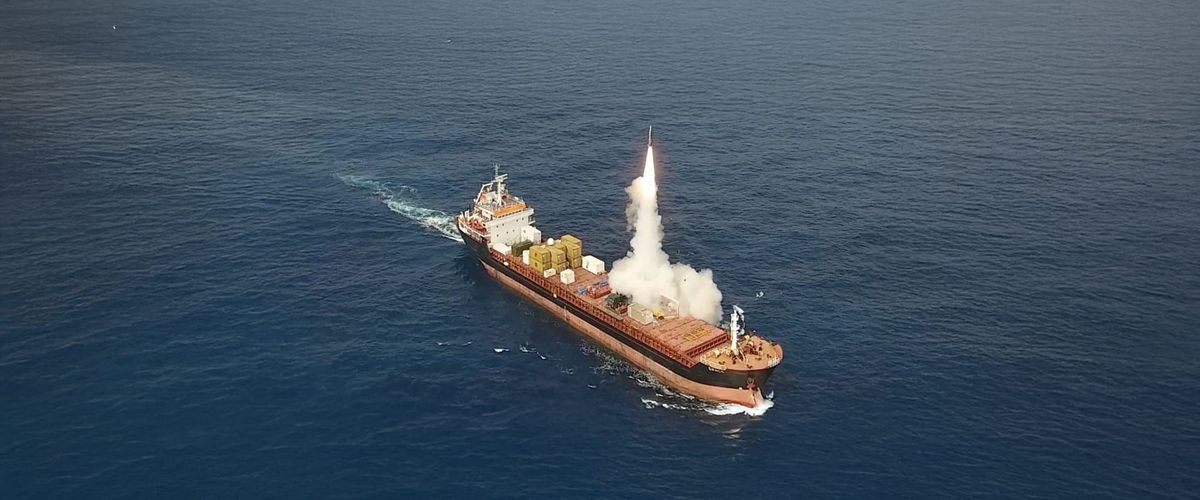
The German Navy has successfully test-fired the Naval LORA ballistic missile developed by Israel Aerospace Industries from an operational German warship in the North Atlantic. The dual firing trial, announced on September 2, gives Berlin a potential route toward a ship-based long-range precision-strike capability that its navy does not currently field.
The trial formed part of the German Navy's Operational Experimentation initiative, or OPEX, which supports the service's Marine 2035 and Beyond modernization plans. Israel Aerospace Industries said two missiles were fired in separate scenarios and completed their planned trajectories and engagements.
The test represents a significant step because Germany currently lacks an operational ballistic missile capability. Berlin is simultaneously pursuing several options to expand the Bundeswehr's ability to strike targets at longer ranges as European NATO members reassess their missile inventories and deterrence requirements.
Naval LORA gives Germany a new ship-based strike option
Naval LORA is the maritime version of Israel Aerospace Industries' Long Range Artillery weapon system. Janes reports that the missile can carry a 600 kg penetration or fragmentation warhead to a range of up to 430 km.
The weapon follows a ballistic trajectory and travels at supersonic speed toward land or maritime targets. The system uses inertial and satellite navigation, while Janes reports that the missile can also perform programmed or random maneuvers intended to complicate tracking and interception.
For the German trial, the launcher and associated command equipment were installed aboard an operational vessel. This configuration is important because it offers a potential route to adding long-range strike capability without waiting for a completely new class of warship.
The test does not by itself establish that Germany has placed a production order for Naval LORA. It demonstrates that the German Navy is actively evaluating the system under its OPEX program and that the weapon has progressed beyond a conceptual integration study.
Germany is rebuilding its long-range strike portfolio
Germany's interest in Naval LORA fits into a wider effort to expand the Bundeswehr's long-range strike options.
The German Air Force already operates the Taurus KEPD 350 air-launched cruise missile. Germany is also working on an upgraded Taurus NEO, which Reuters reports is expected to become available from 2029.
A ballistic weapon launched from a warship would add a different operational option. Unlike an air-launched Taurus mission, a Naval LORA deployment could place precision-strike weapons aboard naval platforms already operating in the North Atlantic, Baltic Sea or other maritime areas.
That distinction matters for NATO's northern and eastern flanks. A German surface combatant equipped with a weapon in the Naval LORA range class could contribute to conventional strike missions from maritime positions while complicating an adversary's planning across multiple domains.
The capability would still depend on targeting, command-and-control architecture, survivability and the number of missiles Germany ultimately fields. The September test therefore demonstrates technical potential rather than an established operational capability.
LORA test feeds into Germany's Marine 2035 modernization
The German Navy conducted the firing under OPEX, an experimentation framework designed to rapidly test technologies and operational concepts relevant to Marine 2035 and Beyond. Israel Aerospace Industries said the initiative allows the navy to assess new systems under conditions intended to approximate operational use.
The approach reflects a broader European shift toward shortening the gap between technology evaluation and fielding. Russia's war against Ukraine has increased NATO attention on long-range fires, ammunition stocks, air and missile defense, and the ability to engage targets beyond the immediate front line.
For Central and Eastern European NATO members, Germany's missile programs have additional significance because German forces form an important part of NATO reinforcement plans on the eastern flank. Poland and the Baltic states are simultaneously investing heavily in strike and air-defense capabilities, creating a denser network of NATO weapons across the region.
Naval LORA would add a maritime component to that development if Berlin proceeds from experimentation to procurement.
Could Germany buy the Naval LORA missile?
What is the Naval LORA missile?
Naval LORA is a ship-deployable version of the LORA ballistic missile family developed by Israel Aerospace Industries. Janes lists the naval weapon with a range of up to 430 km and a 600 kg warhead.
Did Germany successfully test LORA?
Yes. The German Navy completed two operational firing scenarios in the North Atlantic, and Israel Aerospace Industries said both firings met the objectives of the trial.
Does Germany already operate LORA?
The September 2026 firing was an operational experimentation trial rather than evidence of a fielded German LORA capability. Reuters reported that Germany currently has no ballistic missiles in its inventory.
Why is the German LORA test important for NATO?
The test shows Germany evaluating a ship-based ballistic strike option as it expands its long-range weapons portfolio. If procured, Naval LORA could complement air-launched cruise missiles and other long-range systems by giving German naval forces an additional conventional precision-strike option.
The next key question is whether Berlin converts the successful experiment into a procurement program. A purchase would mark a more consequential change than the test itself, adding a new class of long-range weapon to Germany's naval arsenal.