Germany Tests New G2G Defense Export Model with Montenegro
Germany is testing its first government-to-government defense sales model with Montenegro, using four H145M helicopters as a potential blueprint for wider European procurement.
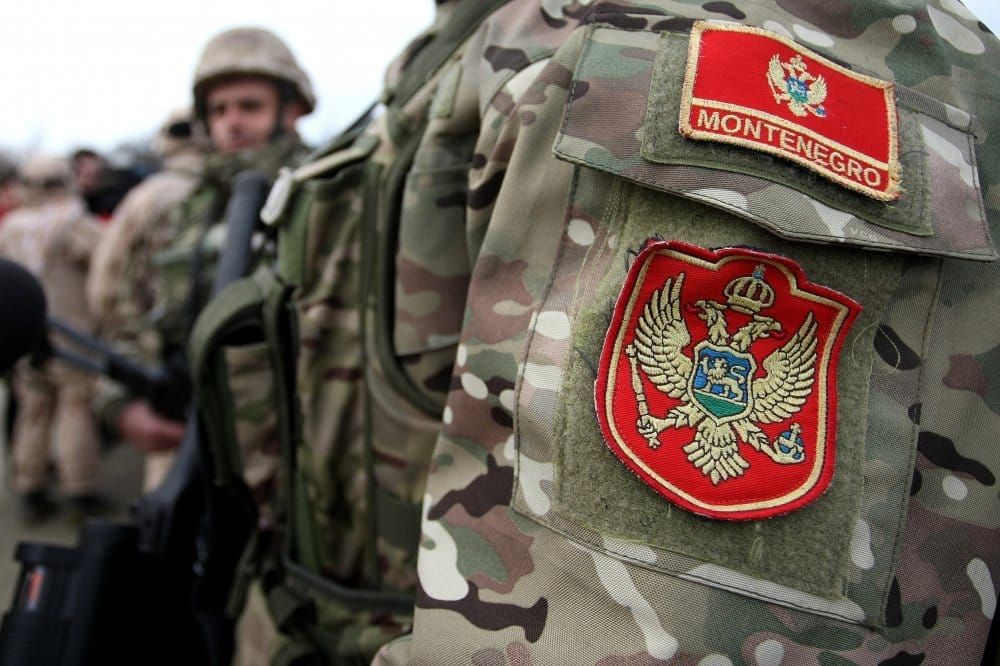
Germany has taken an unusual step in European defense procurement by using Montenegro as the first customer for a new government-to-government defense sales mechanism, potentially giving Berlin a more direct role in exporting German-made military equipment to allied countries.
The agreement, signed in Berlin on June 12 by German Defense Minister Boris Pistorius and his Montenegrin counterpart Dragan Krapović, establishes direct cooperation between the two governments covering the procurement of military and defense equipment, training and services.
Montenegro's Ministry of Defense described it as the first government-to-government agreement of its kind concluded by Germany, adding that it creates a foundation for future joint modernization projects between the two countries.
The first major procurement under the arrangement is expected to involve four Airbus H145M military helicopters for the Armed Forces of Montenegro. AdriaDefense previously reported on Montenegro's planned H145M acquisition when the agreement emerged in June.
While the number of aircraft is relatively small, the mechanism being used to acquire them could have broader implications for Germany's defense industry and for smaller European countries seeking access to major procurement programs.
Montenegro taps into Germany's H145M procurement
Rather than Montenegro conducting an entirely separate acquisition directly from Airbus, the four H145Ms are expected to be supplied from a tranche ordered for Germany.
Aviation Week reported following the signing that Montenegro will receive four H145M helicopters from a batch ordered by the German Army.
Germany has become one of the world's largest H145M operators. In December 2025, Berlin exercised an option for another 20 aircraft, bringing its total H145M LKH procurement to 82 helicopters.
Under the current plan, 72 are intended for the German Army and ten for Luftwaffe special forces.
Airbus manufactures the H145M at its Donauwörth facility in Germany.
The helicopter can perform missions ranging from reconnaissance and troop transport to special operations and light attack. It uses Safran Arriel 2E engines and Airbus' Helionix avionics suite with a four-axis autopilot.
For Montenegro, joining a substantially larger German procurement program could provide advantages that would be difficult to achieve through an isolated four-aircraft purchase.
A small NATO military can potentially benefit from an established procurement structure, training arrangements and a much larger logistics and support ecosystem surrounding the German fleet.
Why Germany's G2G model matters
The significance of the agreement extends beyond the H145M.
Traditionally, a foreign government purchasing German defense equipment negotiates with the manufacturer while Germany primarily acts through its regulatory and export-control system.
Under a government-to-government structure, Berlin can take a more active role in the transaction.
In practical terms, this creates the possibility of Germany acting as an intermediary between its defense procurement system and allied governments seeking German equipment.
The concept bears some similarities to state-backed defense sales mechanisms used by other major arms exporters, most notably the United States' Foreign Military Sales system, although Germany has not established an equivalent institutional framework and the two systems should not be considered identical.
For Berlin, however, the strategic logic is clear.
If the Montenegro arrangement can be replicated, Germany could potentially aggregate orders from smaller allies alongside Bundeswehr procurement programs.
Instead of a country independently purchasing a small number of platforms, it could potentially join or draw from a substantially larger German acquisition.
That could increase purchasing scale, encourage common equipment across NATO forces and make German defense products more accessible to countries that cannot justify large standalone procurement programs.
Germany and its defense industry could be the biggest strategic winners
The model could also strengthen Germany's position as a European defense supplier.
Germany is currently undertaking one of Europe's largest military modernization programs, generating large procurement volumes across helicopters, air defense, armored vehicles, ammunition and other systems.
Opening portions of that procurement ecosystem to partner countries could transform some Bundeswehr acquisitions into wider European procurement frameworks.
German and Germany-based manufacturers could benefit indirectly.
Companies including Airbus, Rheinmetall, Diehl Defence, KNDS Deutschland and others compete in a rapidly expanding European defense market in which governments increasingly emphasize joint procurement, interoperability and faster deliveries.
A functioning German G2G channel could give Berlin another instrument to support exports while simultaneously strengthening military relationships with NATO and EU partners.
For manufacturers, aggregating smaller international requirements around larger domestic programs could also provide greater production visibility and potentially reduce the complexity associated with small standalone orders.
Montenegro gains purchasing leverage
The potential advantages are particularly significant for Montenegro.
With a population of around 600,000 and one of NATO's smallest armed forces, Montenegro cannot generate the procurement volumes of countries such as Germany, Poland or Romania.
Buying four helicopters independently provides limited negotiating leverage.
Participating through Germany changes that equation.
Montenegro can obtain a platform being introduced in significant numbers by one of NATO's largest militaries while potentially benefiting from Germany's established procurement, training and sustainment infrastructure.
There is also a political advantage.
The agreement creates a defense relationship that extends beyond a single Airbus contract.
Montenegro's Ministry of Defense said the agreement establishes the foundation for future joint projects involving the modernization of defense capabilities.
That language leaves the door open for additional German-supported acquisitions.
Who could lose?
There are no obvious losers from the H145M transaction itself, but widespread adoption of the model could change how European defense deals are structured.
One group potentially exposed is traditional defense intermediaries.
If governments can purchase equipment directly through another government's procurement framework, there is less need for commercial agents or intermediaries whose primary role is connecting a foreign defense ministry with a manufacturer.
Their role would not disappear entirely. Local industrial participation, integration, maintenance and political or regulatory support can still require private-sector partners, but straightforward platform sales could become increasingly state-to-state.
Germany's competitors could face a more important strategic challenge.
Once a smaller country becomes embedded in a German procurement and support ecosystem, subsequent acquisitions from the same ecosystem may become easier.
Common training, maintenance, ammunition, spare parts and logistics create powerful incentives for standardization.
A successful H145M program therefore has the potential to influence procurement decisions extending well beyond helicopters.
A potential blueprint for smaller European allies
Montenegro may ultimately be more important as a test case than as a customer.
European defense spending is rising rapidly, but procurement remains fragmented among countries with dramatically different military budgets.
For smaller NATO members in Central, Eastern and Southeastern Europe, joining the procurement programs of larger allies can offer an alternative to running expensive national competitions for relatively small quantities of equipment.
Germany now has an opportunity to position itself as one of those procurement hubs.
Whether Berlin turns the Montenegro agreement into a repeatable mechanism remains to be seen. Germany has not announced a comprehensive equivalent to the U.S. Foreign Military Sales system, and the Montenegro agreement should not yet be interpreted as one.
But the precedent has now been established.
The first German G2G defense agreement is not with one of Europe's largest military spenders, but with Montenegro, a small Balkan NATO member acquiring just four helicopters.
If Germany replicates the approach with other countries and other equipment categories, the significance of the deal could ultimately extend far beyond the four H145Ms heading to Montenegro.
Germany-Montenegro G2G defense agreement: key questions
What is Germany's G2G defense agreement with Montenegro?
The agreement establishes direct government-to-government cooperation between Germany and Montenegro for military and defense equipment, training and services. Montenegro's Ministry of Defense described it as Germany's first G2G agreement of its kind.
What will Montenegro acquire through the agreement?
The first major procurement is expected to cover four Airbus H145M military helicopters for the Armed Forces of Montenegro. The aircraft are expected to come from a larger batch ordered for Germany.
Why could Germany's G2G defense model matter for other NATO countries?
The mechanism could allow smaller allies to access equipment through larger German procurement programs rather than relying exclusively on small standalone purchases. If replicated, it could support common equipment, training, logistics and sustainment across participating NATO forces.
Is Germany creating an equivalent to the U.S. Foreign Military Sales system?
Not at this stage. Germany has not announced a comprehensive institutional framework equivalent to the U.S. Foreign Military Sales system, but the Montenegro agreement establishes a precedent for a more direct German government role in defense exports.