Romania Launches SAFE Contract Review as €5.7 Billion Rheinmetall Package Draws Attention
Romania launches a review of EU SAFE defense contracts, examining supplier selection and pricing as Rheinmetall's €5.7 billion procurement package draws attention.


Romania has launched a review of defense procurement contracts financed through the European Union's €150 billion SAFE program, with the country's new Defense Minister, Ștefan Radu Oprea, ordering an examination of supplier selection, equipment specifications and contract pricing.
The decision, announced on October 29, comes as Romania implements a €16.68 billion EU-backed investment plan that includes some of Europe's largest recent defense equipment orders. Among the most significant is a €5.7 billion package awarded to German defense manufacturer Rheinmetall covering armored vehicles, air defense systems, ammunition and naval vessels.
Oprea confirmed that the ministry's Control Corps had been dispatched to the General Directorate for Armaments (DGARM), the organization responsible for military equipment requirements and procurement procedures.
The review will examine whether equipment selected under SAFE meets the Romanian Armed Forces' technical requirements, whether contract prices are justified when compared with potential competing offers, and how suppliers were chosen.
No finding of wrongdoing has been announced, and the review does not in itself indicate that signed defense contracts have been suspended or canceled.
Rheinmetall's €5.7 Billion Contract Package in Focus
Rheinmetall is one of the largest industrial beneficiaries of Romania's SAFE-financed defense modernization program.
On May 29, Romania's Ministry of National Defence signed several major procurement agreements with companies belonging to the German group. Rheinmetall subsequently confirmed that the combined contracts were worth approximately €5.7 billion.
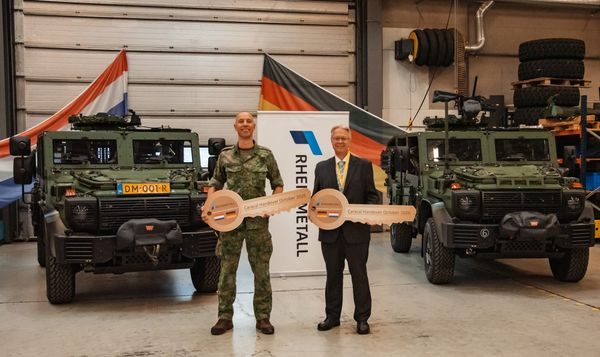
The package includes a €3.337 billion framework agreement with Rheinmetall Automecanica for 298 Lynx infantry fighting vehicles and related variants, excluding VAT. Another €981.95 million contract with Rheinmetall Italia covers seven Skynex air defense systems, two Skyranger 35 systems and two Millennium close-in weapon systems.
Romania also signed a €920 million naval agreement with Rheinmetall's NVL subsidiary for two offshore patrol vessels and two diver intervention vessels. A further contract worth approximately €449.75 million covers more than 400,000 rounds of 35 mm AHEAD ammunition.
According to Rheinmetall, the programs will involve substantial industrial investment in Romania, technology transfer and the participation of more than 200 subcontractors. Deliveries under the package are scheduled to begin in 2028 and continue through 2030.
The German manufacturer is also expanding its Romanian naval manufacturing presence. Earlier this month, AdriaDefense reported that Rheinmetall had won a €138 million auction for Romania's Mangalia shipyard, a facility connected to the country's future military shipbuilding plans.
While Oprea has raised questions about the process used to select suppliers, the review has not established wrongdoing by Rheinmetall or any other manufacturer.
Romanian Minister Questions Supplier Selection Process
Speaking to Romanian broadcaster Antena 3 CNN, Oprea said his review would focus on the procurement process as well as the technical and financial justification for equipment purchases.
The minister argued that final decisions regarding supplier selection had been made through a working group coordinated by the Prime Minister's Chancellery, rather than exclusively within the Defense Ministry's procurement structures.
According to Oprea, representatives of the Ministry of National Defence, Ministry of Internal Affairs and other government institutions participated in the process, but responsibility for selecting suppliers was concentrated at the government level.
He also emphasized the distinction between defense procurement contracts and industrial cooperation agreements.
Under Romania's SAFE arrangements, industrial cooperation commitments fall under the responsibility of the Ministry of Economy. Oprea said the acceptance of equipment is linked to certification that the required level of industrial cooperation in Romania has been fulfilled.
Former Defense Minister Radu Miruță has challenged the criticism, defending the procurement process and arguing that the relevant details are publicly available through the Defense Ministry. Miruță maintained that the agreements had been concluded without favoritism or improper commissions.
The disagreement has created a political dispute over oversight and responsibility for major defense procurement decisions, although the review's findings have yet to be presented.
Romania Holds €16.68 Billion in EU SAFE Financing
Romania is one of the largest beneficiaries of the European Union's Security Action for Europe financing instrument, with access to loans totaling approximately €16.68 billion.
The European Commission made approximately €2.5 billion in prefinancing available to Romania in August 2026.
According to Romania's Ministry of Finance, the national investment plan comprises 35 projects. Approximately 75% of the allocation is intended for military equipment, public security and civil protection, while around 25% supports strategic transport infrastructure.
The financing is structured as long-term EU loans rather than grants. Romania must meet agreed implementation milestones to access subsequent funding tranches.
The country's defense procurement portfolio extends beyond Rheinmetall. Romania has signed an approximately €757 million agreement for 12 Airbus H225M military helicopters, as well as contracts involving Thales radar systems and other military capabilities.
AdriaDefense previously reported on Airbus's H225M contract, including the planned participation of Romanian aerospace manufacturer IAR in future industrial activities.
Romania has also approved a broader 2027–2036 military procurement plan, providing a longer-term framework for the modernization of its armed forces.
What the Review Means for Defense Manufacturers
The review introduces a new oversight process into Romania's defense procurement program at a time when manufacturers are preparing substantial production and industrial investment commitments.
For international suppliers, the most consequential issues are likely to be how procurement prices were evaluated, whether equipment specifications met military requirements and how industrial cooperation commitments were negotiated.
These questions are particularly relevant to companies investing in Romanian production facilities, subcontracting networks and technology-transfer programs.
However, there is currently no confirmed evidence that the review has resulted in procurement suspensions, contract amendments or changes to delivery schedules.
The next important development will be the publication of the Control Corps' findings and any subsequent decisions taken by Romania's Defense Ministry or other government institutions.
For Rheinmetall and other international manufacturers, the outcome will help determine whether the review remains an internal administrative assessment or leads to changes in Romania's procurement procedures.
Sources: News.ro, October 29, 2026; Romanian Ministry of National Defence, SAFE Program; Rheinmetall, June 2, 2026; Europa FM, October 30, 2026.