Poland Earmarks €5.9 Billion for Drones as First MQ-9B Arrives in January
Poland earmarks €5.9 billion for drones and counter-UAS capabilities as its first General Atomics MQ-9B SkyGuardian is scheduled for delivery in January 2027.

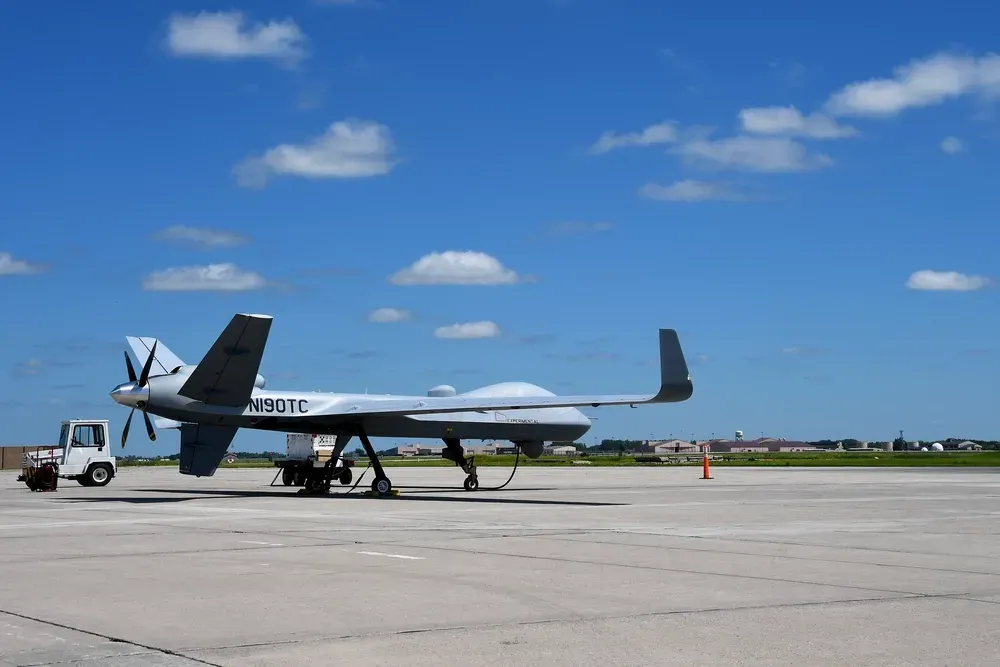
Poland has earmarked approximately €5.9 billion for drone and counter-drone capabilities in 2026, Defense Minister Władysław Kosiniak-Kamysz announced on October 30, as the country prepares to receive its first General Atomics MQ-9B SkyGuardian unmanned aircraft in January 2027.
Speaking during a visit to the 12th Unmanned Aerial Vehicle Base in Mirosławiec, Kosiniak-Kamysz said Poland had dramatically expanded investment in unmanned systems, compared with approximately €23 million annually in 2023.
The funding priorities include reconnaissance and strike drones, counter-unmanned aircraft systems, autonomous platforms and supporting technologies. The minister linked the investment drive directly to operational lessons from the war in Ukraine, emphasizing that unmanned systems are becoming essential equipment across Poland's armed forces.
The €5.9 billion figure reflects the scale of the government's announced investment plans and commitments, rather than a verified total of completed payments. Earlier this year, Poland's Defense Ministry indicated that approximately €5.7 billion in contracts involving unmanned, autonomous and counter-drone technologies were planned for 2026.
First MQ-9B SkyGuardian Expected in January 2027
The announcement coincides with preparations for the arrival of Poland's first MQ-9B SkyGuardian, manufactured by US defense company General Atomics Aeronautical Systems (GA-ASI).
Poland signed an approximately €277 million contract in December 2024 to acquire three MQ-9B aircraft. According to General Atomics, the agreement also includes two Certifiable Ground Control Stations and three years of support services.
The new aircraft will replace the older MQ-9A Reapers operated by the Polish Armed Forces under a leasing arrangement since 2023.
The MQ-9B provides long-endurance intelligence, surveillance and reconnaissance capabilities, including electro-optical sensors, synthetic aperture radar and electronic intelligence collection. Its operational capabilities are intended to strengthen Poland's ability to monitor large areas and support military decision-making.
Kosiniak-Kamysz confirmed that the first aircraft is expected at Mirosławiec in January 2027, within the original delivery window established under the procurement agreement.
Poland is also expanding the infrastructure required to operate its unmanned fleet. Approximately €227 million has already been invested in the Mirosławiec base, with a further €204 million planned for a logistics center supporting the MQ-9B program.
Counter-Drone Investments Create Opportunities for European Manufacturers
Poland's wider investment in unmanned systems is already translating into contracts for domestic and international defense manufacturers, particularly in radar, electronic warfare, command-and-control systems and counter-UAS integration.
Earlier this week, AdriaDefense reported that Denmark's Weibel Scientific secured an €84 million radar contract to supply XENTA-M5 radar systems for Poland's SAN counter-drone program.
The agreement follows KONGSBERG's announcement of a €45 million investment in a new counter-drone manufacturing facility in Poland, illustrating the growing industrial opportunities created by Warsaw's defense modernization efforts.
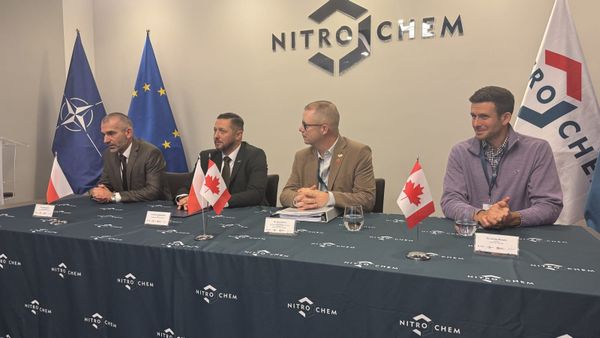
Polish companies are also expanding their position in the unmanned systems market. In October, Bumech Defense announced plans to distribute Canadian-developed drones and establish production capabilities in Poland.
The combination of major international procurement programs and domestic industrial development reflects Poland's effort to build unmanned capabilities across different operational levels, from small tactical systems to long-endurance surveillance aircraft.
For European defense manufacturers, the scale of Poland's announced investments highlights growing demand for sensors, electronic warfare equipment, autonomous technologies, communications systems and integrated counter-drone solutions. However, the precise distribution of the €5.9 billion across individual programs has not been publicly detailed.
Currency conversions are approximate, based on European Central Bank reference exchange rates for October 30, 2026.
Sources: Polish Ministry of National Defense; General Atomics Aeronautical Systems.