South Korea's LIG Defense & Aerospace Eyes Croatia Air Defense Deal, Names Six Potential Industry Partners
South Korea's LIG Defense & Aerospace has presented layered air defense solutions to Croatia, with DOK-ING, ORQA, KONČAR and other Croatian companies identified for potential cooperation.

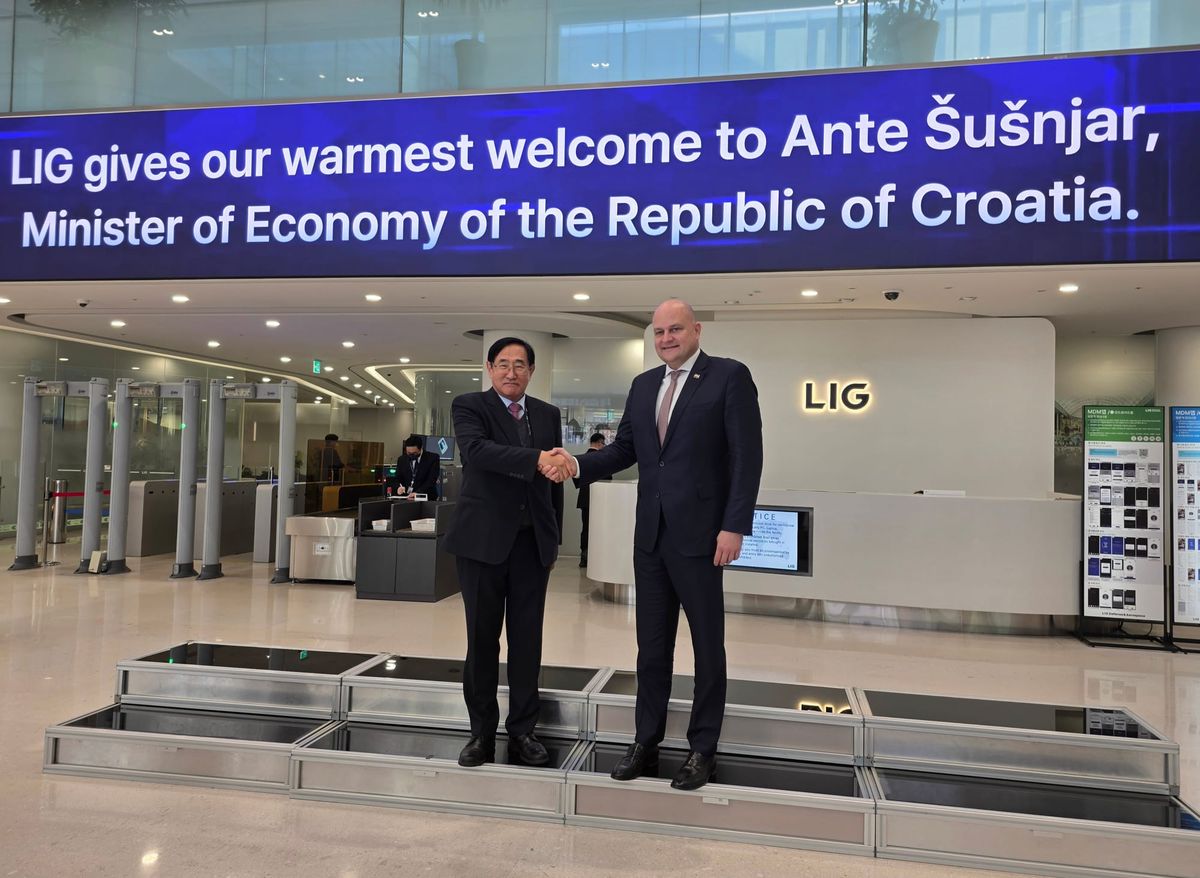
South Korean defense manufacturer LIG Defense & Aerospace is exploring opportunities to supply integrated air defense capabilities to Croatia while expanding industrial cooperation with Croatian technology companies.
Croatian Economy Minister Ante Šušnjar visited LIG Defense & Aerospace's research and development center in Pangyo, Seongnam, on October 28, where company representatives presented multilayered air defense solutions and discussed potential joint development and production projects.
The meetings were confirmed in separate statements released on October 29 by the Croatian government and LIG Defense & Aerospace.
The discussions identified six Croatian companies as relevant to potential industrial cooperation: DOK-ING, ORQA, KONČAR, OIV, Ericsson Nikola Tesla and FRIPOL.
No air defense procurement contract, technology transfer agreement or new industrial partnership was announced following the visit.
LIG Presents Multilayered Air Defense Solutions for Croatia
LIG Defense & Aerospace used the ministerial visit to present an integrated air defense concept designed to address aerial threats at different altitudes.
According to the company's announcement, its proposed approach combines capabilities intended to counter threats across multiple layers of the airspace, potentially offering Croatia a framework for strengthening its future air defense architecture.
Baek Hyeong-sik, head of LIG Defense & Aerospace's overseas business division, expressed the company's interest in contributing to Croatia's airspace protection and expanding bilateral defense cooperation.
The Korean manufacturer develops guided weapons, surveillance and reconnaissance technologies, command-and-control systems and other defense electronics.
Its discussions with the Croatian delegation also covered the potential for technological cooperation and joint development with local industrial partners.
The company indicated that its interest extends beyond supplying complete weapons systems to establishing broader relationships with European defense manufacturers.
The announcement does not identify a specific missile system selected by Croatia, nor does it establish an acquisition budget or delivery schedule.
Six Croatian Companies Identified for Cooperation
The Croatian government's statement provides additional insight into the companies considered relevant to future cooperation with LIG Defense & Aerospace.
DOK-ING, ORQA, KONČAR and OIV were identified within the Korean manufacturer's business and technological environment, while Ericsson Nikola Tesla and FRIPOL were presented as additional potential partners with complementary capabilities.
The companies represent different segments of Croatia's industrial and technology base.
DOK-ING develops specialized unmanned ground vehicles and robotic platforms, while ORQA focuses on unmanned aerial technologies, including FPV drone systems.
KONČAR brings expertise in electrical engineering, energy infrastructure and industrial technology, while OIV specializes in communications infrastructure and related technical services.
Ericsson Nikola Tesla operates in telecommunications, digital systems and software engineering. FRIPOL adds another potential industrial connection within Croatia's manufacturing sector.
The selection highlights opportunities for Croatian companies to participate in multinational defense projects through technology development, integration, manufacturing and supporting systems.
However, the Croatian government did not identify which companies might supply specific components to LIG or disclose the commercial scope of existing cooperation.
The meetings therefore represent potential business development opportunities rather than confirmed contracts for the six companies.
Croatia's Growing Defense Relationship With South Korea
The LIG discussions follow Croatia's September 2026 agreement with Hanwha Aerospace for the acquisition of 18 K239 Chunmoo multiple rocket launchers.
The wider Croatian procurement package is valued at approximately €435.2 million excluding VAT and includes associated equipment, ammunition and command-and-control capabilities.
As previously reported by AdriaDefense, the Chunmoo acquisition is part of Croatia's effort to expand its precision-strike capabilities and diversify its defense supply relationships.
The agreement also demonstrated South Korea's growing position as a supplier of major weapons systems to Southeast European NATO members.
LIG's latest engagement could broaden that relationship into integrated air defense, electronics and industrial technology.
The two developments are separate commercial initiatives involving different South Korean companies. The October discussions do not establish that Croatia has selected LIG as an air defense supplier.
From Equipment Imports to Industrial Participation
The potential role of Croatian manufacturers may become one of the most important elements of future defense cooperation with South Korea.
Croatia has an established industrial base in robotics, unmanned systems, communications and specialized manufacturing. These capabilities create opportunities for domestic companies to become technology and production partners rather than participate solely as subcontractors for local servicing.
During the Korean visit, the Croatian delegation emphasized domestic expertise in advanced technological solutions, including unmanned ground systems and modular ammunition.
The Croatian government also identified possible joint research, manufacturing projects and export opportunities as areas for further discussion.
For LIG Defense & Aerospace, cooperation with Croatian firms could support its broader expansion into the European defense market, where local industrial participation is increasingly relevant to major procurement programs.
For Croatian manufacturers, such partnerships could provide access to international development projects, new customers and opportunities to enter multinational defense supply chains.
The immediate next step will be whether the discussions lead to specific industrial agreements, technical cooperation programs or formal procurement negotiations.
Until then, the development represents an opening for closer South Korean-Croatian defense-industrial cooperation, rather than a finalized acquisition.